A breakdown of three wars Donald Trump says he has ended
-Article by Sean Heart, January 21, 2026
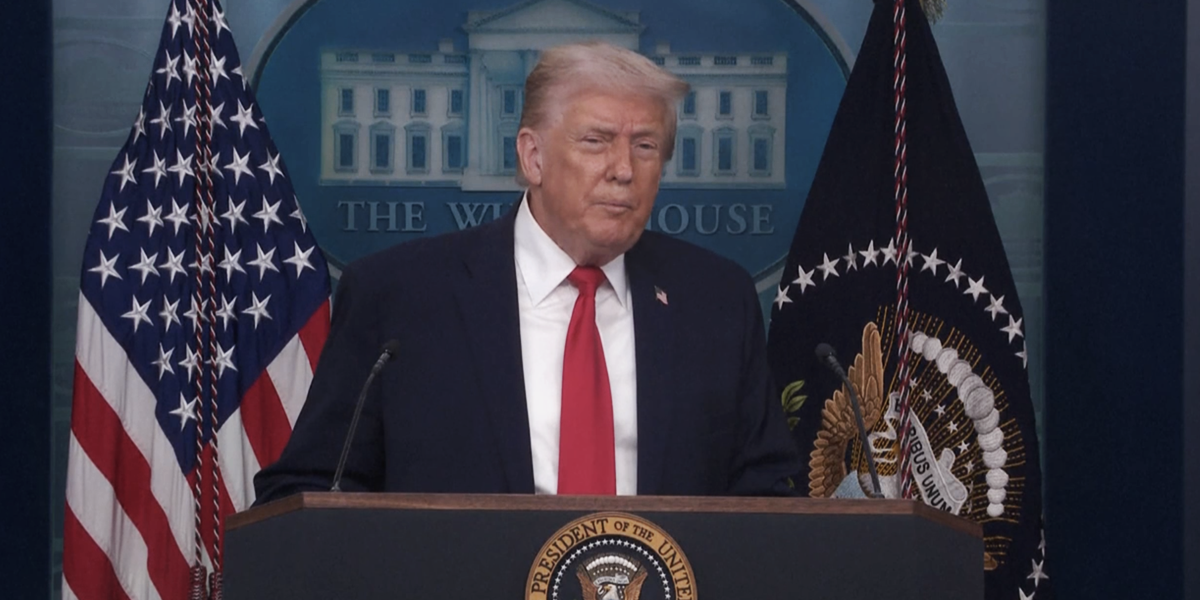
Democratic values are never guaranteed, they are defended by people who raise their voices, demand accountability, and protect the rights of all. Join us in the fight for open societies and resilient institutions.
Opinion by Sean Heart, December 12, 2025
The United States has long relied on an uneasy but essential balance between government power, private enterprise, and the rule of law. That balance is increasingly strained when large technology companies align themselves too closely with executive authority. During the Trump administration, the convergence of Big Tech and presidential power raises concerns that go beyond partisan politics. At stake is the possibility of a constitutional crisis, one fueled not by tanks in the streets, but by terms of service, data pipelines, and silent compliance.
A constitutional crisis occurs when the basic mechanisms of governance, checks and balances, judicial independence, and legislative oversight are undermined or rendered ineffective. While such crises are often imagined as dramatic confrontations between branches of government, they can also emerge more quietly, through structural dependencies. Big Tech companies now occupy a quasi-institutional role in modern democracy. They control platforms essential for speech, access to information, political organizing, and even public administration. When executive power pressures or co-opts these entities, the effects can be profound.
Under the Trump administration, this risk became particularly visible. The White House frequently sought to influence content moderation, surveillance practices, and data access, often framing compliance as a matter of national security or patriotism. When technology companies comply whether out of fear of regulation, desire for favorable treatment, or ideological alignment, they risk becoming de facto extensions of executive power. This blurs the constitutional boundary between state authority and private enterprise, allowing the executive branch to bypass traditional legal constraints.
The danger is not merely theoretical. If a president can indirectly suppress speech, monitor dissent, or punish critics by leveraging private platforms, First Amendment protections are weakened without ever being formally repealed. Courts may find it difficult to intervene when actions are carried out by corporations rather than government agencies, even if the intent and effect are functionally governmental. In this way, collusion explicit or implicit between Big Tech and the executive government branch can hollow out constitutional safeguards while preserving the appearance of legality.
An additional and deeply troubling layer emerges when this dynamic extends beyond U.S. borders, particularly in relation to international law. Several technology companies have reportedly complied with sanctions imposed by the Trump administration against officials and institutions connected to the International Criminal Court (ICC). These sanctions, widely criticized by legal scholars and human rights organizations, were designed to punish the ICC for investigating alleged war crimes involving US allies.
Big Tech’s compliance in this context is not neutral. By restricting services, freezing accounts, or limiting access to essential digital infrastructure, technology firms effectively participated in a campaign to undermine an international judicial body. This raises serious ethical concerns. The ICC exists to uphold accountability for the gravest crimes of genocide, crimes against humanity, and war crimes. Sanctions aimed at crippling its work, and corporate compliance with those sanctions, signal a willingness to subordinate justice to political expediency.
Such behavior highlights a broader problem: Big Tech often frames compliance as a purely legal obligation, divorced from moral responsibility. Yet these companies routinely make discretionary decisions with global consequences. They choose which laws to challenge, which markets to exit, and which ethical lines to draw. To comply with sanctions widely regarded as inhumane and retaliatory is not simply to follow the law, it is to endorse, or at least facilitate an assault on international accountability.
When powerful corporations align themselves with executive overreach domestically or internationally, the risk is cumulative. Constitutional norms erode at home, while respect for the rule of law weakens abroad. The result is a concentration of power that escapes democratic control.
Preventing a constitutional crisis in the digital age requires more than vigilance toward government actors alone. It demands scrutiny of the private entities that now function as critical infrastructure for democracy and justice. Big Tech cannot be allowed to operate as an unaccountable partner to executive power. The Constitution, and the broader system of human rights it has helped inspire, depends on that line being clearly and firmly drawn.
-Article by Sean Heart, January 21, 2026
-Article by Sean Heart, January 11, 2026
-Article by Sean Heart, January 10, 2026

-Report by Sean Heart, January 3, 2026
-Article by Sean Heart, december 30, 2025

-Article by Sean Heart, december 26, 2025

-Article by Sean Heart, december 22, 2025
-Article by Sean Heart, december 22, 2025
-Article by Sean Heart, december 19, 2025
-Article by Sean Heart, december 16, 2025
-Opinion by Sean Heart, december 15, 2025